GPhC registered|Tracked Delivery
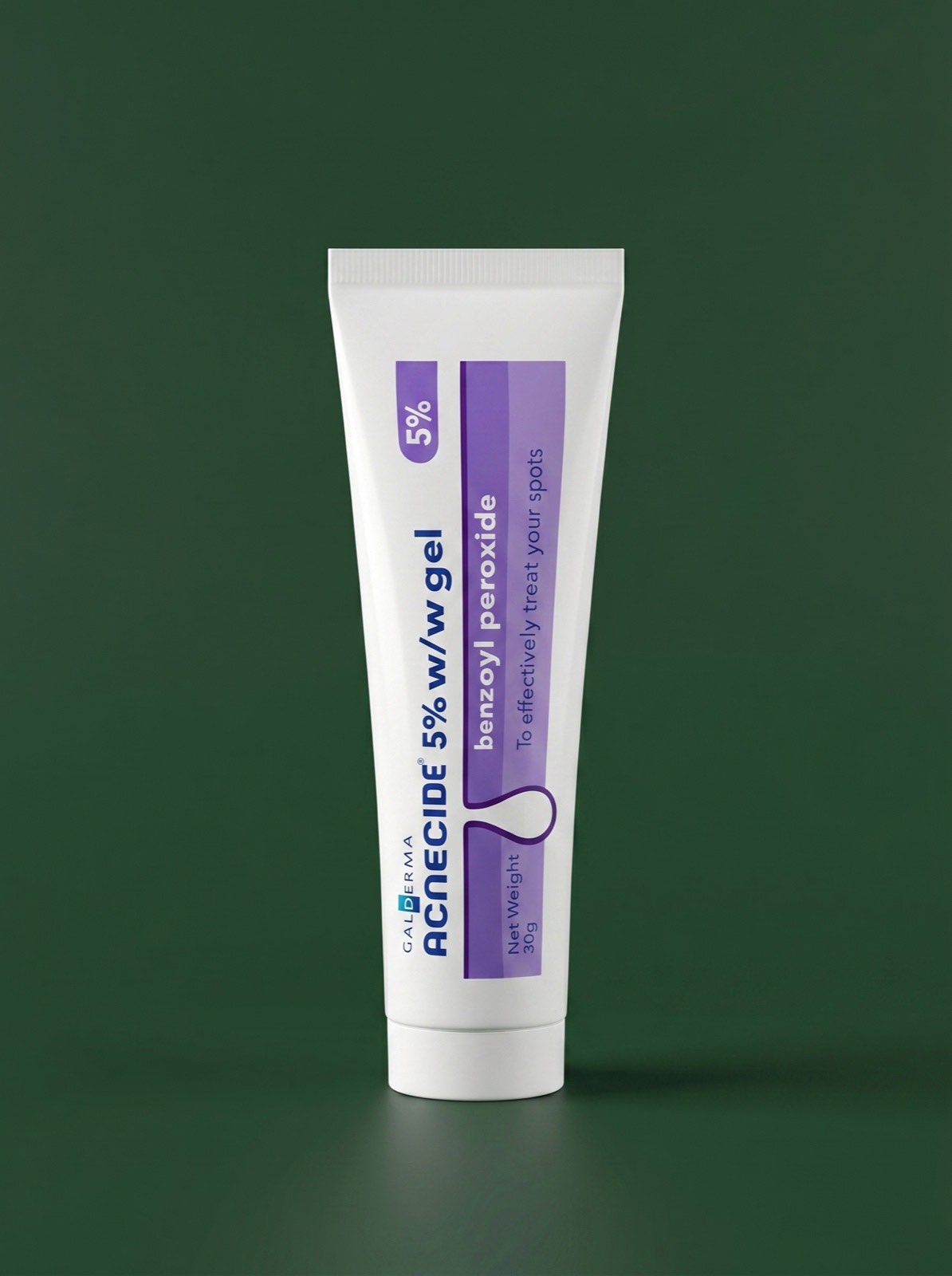
Acnecide (Benzoyl peroxide 5% gel)
Active ingredient
Benzoyl peroxide 5% w/w
Formulation
Topical aqueous gel
Class
Topical keratolytic antimicrobial
Manufacturer
Galderma / generic (UK MHRA-licensed)
“Every Acnecide supply is reviewed personally. We check suitability, safe use, and whether pharmacist supply is appropriate.”
— Younes Mekhalfia, GPhC-registered pharmacist

Acnecide

Benzoyl peroxide 5% gel

A once-daily topical (benzoyl peroxide 5%) used as part of a UK pharmacist-led acne programme — the first-line option for mild acne, pregnancy-compatible, and resistance-free.

From£15/ month

Starter dose Thin layer to affected areas, once daily (build up to twice) · Consultation included · Discreet, tracked delivery

  • Once-daily topical (build up to twice daily as tolerated)
  • Non-antibiotic antimicrobial — no resistance risk
  • Compatible with pregnancy and breastfeeding
  • Pharmacist-reviewed before every supply
Check eligibility

Free consultation · You’re only charged if treatment is approved

  • GPhC-registered pharmacy
  • UK Licensed Medication
  • Discreet packaging
How it works

How Acnecide works in the body

  1. Kills acne bacteria

    Benzoyl peroxide generates reactive oxygen species in the follicle, killing Cutibacterium acnes through a non-antibiotic mechanism. Bacteria do not develop resistance to benzoyl peroxide the way they can to clindamycin or erythromycin.

  2. Unblocks pores

    Mild keratolytic action helps clear surface debris and break down the keratin plug that forms microcomedones — the earliest acne lesion.

  3. Reduces inflammation

    By cutting the bacterial load, BPO reduces the downstream inflammatory cascade that produces papules and pustules.

Clinical evidence

What the trial data shows

Peer-reviewed evidence for Acnecide, cited and attributed — not reframed as a personal promise.

Meta-analysis / systematic review

Thiboutot et al. — BPO evidence review

Thiboutot D et al., Cutis, 2008;82(6):417–421

Participants
1,319
Duration
Pooled acne trials (12 weeks typical)
Comparator
Vehicle, topical antibiotic monotherapy

Pooled data across acne trials supports benzoyl peroxide as an effective first-line topical — reducing inflammatory lesion counts versus vehicle and comparable to topical-antibiotic monotherapy, without the antibiotic-resistance liability.

Observational follow-up

Eady et al. — BPO and antibiotic resistance

Eady EA et al., Journal of Antimicrobial Chemotherapy, 2003;52(4):664–668

Participants
311
Duration
16 weeks
Comparator
BPO + erythromycin vs erythromycin alone

Combination of BPO with a topical antibiotic reduced the emergence of antibiotic-resistant C. acnes strains compared with antibiotic monotherapy — a key reason BPO is recommended alongside any topical antibiotic course.

Trial results do not predict individual outcomes. Your pharmacist will discuss realistic expectations during consultation.

Dosing

Typical dosing schedule

Doses escalate gradually under pharmacist supervision to support tolerability. Your exact plan is set during your consultation.

Typical Acnecide dose escalation schedule
WeekNotes
Week 1

Thin layer once daily in the evening

Start gently. Apply to clean, dry skin. Avoid eyes, lips, and nostrils. Let dry fully before styling or sleeping. Benzoyl peroxide bleaches fabric — take care with pillowcases and towels.

Weeks 2–4

Once or twice daily as tolerated

If tolerated, step up to twice daily (morning and evening) for fuller effect. A bland non-comedogenic moisturiser offsets dryness. Daily broad-spectrum SPF 30+ is essential.

Weeks 8–12

Continue twice daily

Clinical response is typically assessed at 8–12 weeks. Acnecide can be used as long-term maintenance without the resistance issues seen with topical antibiotics.

Safety profile

Possible side effects

Grouped by frequency. Your pharmacist will review these with you in detail before you start.

Common
  • Skin dryness, peeling, or mild erythema
  • Mild burning or stinging on application
  • Increased sensitivity to sunlight (UV)
  • Bleaching of fabric, towels, pillowcases, or hair
Uncommon
  • Contact dermatitis
  • Worsening of pre-existing dermatitis or rosacea
  • Transient acne flare
Rare
  • Severe allergic reaction (stop and seek urgent medical advice)
  • Severe irritant reaction requiring discontinuation

Not a complete list. Read the Patient Information Leaflet supplied with your medication. Report any suspected side effects to the MHRA Yellow Card scheme.

Eligibility

Is Acnecide right for you?

Usually suitable for

  • Adults and adolescents aged 12+ with mild comedonal or inflammatory acne
  • Pregnancy and breastfeeding (pharmacist review)
  • People seeking a first-line, non-antibiotic, non-retinoid topical
  • No allergy to benzoyl peroxide or excipients

Not suitable if you are / have

  • Severe cystic or nodular acne (specialist referral usually needed)
  • Active eczema, rosacea, or broken skin on the treatment area
  • Known sensitivity to benzoyl peroxide

This is a summary, not a complete assessment. A pharmacist reviews your full health history during consultation before any prescription is issued.

What’s included

Everything in your welcome kit

  • 01Acnecide 5% gel (30g tube)
  • 02UK pharmacist consultation and supply review
  • 03Discreet, tracked delivery in plain packaging
  • 04Ongoing pharmacist support via secure messaging
Younes Mekhalfia - independent prescribing pharmacist
Independent Prescribing Pharmacist

Dispensed & Checked by Us

Unlike other online services, we don’t outsource your care. Every prescription is reviewed, dispensed, and packed by our UK-based clinical team. You’re not just a number - you’re a patient we’re committed to supporting.

“Each consultation is reviewed by a qualified prescriber within their clinical scope before any prescription treatment is supplied.”

— Younes Mekhalfia, Independent Prescribing Pharmacist

Every order

Clinical Review

In-house

UK Dispensing

Individual

Clinical Support

Real humans

Support

Everything you need to know about Acnecide

Find answers about treatment, safety and the service journey.

How does benzoyl peroxide treat acne?

Benzoyl peroxide releases reactive oxygen species in the follicle that kill Cutibacterium acnes — the bacteria driving inflammatory acne lesions. It also has mild keratolytic action that helps clear the pore plug. Crucially, it kills bacteria through a non-antibiotic mechanism, so there is no resistance pressure.

How long until I see a response?

Clinical response is typically assessed at 8–12 weeks. Many people notice a reduction in papules and pustules within the first 4–6 weeks; full effect takes longer. The pharmacist reviews response and tolerability at follow-up.

Why is benzoyl peroxide important alongside antibiotics?

Topical antibiotics alone can drive resistance in skin bacteria. Combining with benzoyl peroxide (which kills bacteria through a different, non-antibiotic pathway) reduces the emergence of resistant strains (Eady et al., J Antimicrob Chemother 2003) — which is why UK guidance rarely recommends topical-antibiotic monotherapy.

How much do I apply?

A thin layer on the affected areas, once daily to start (evenings). After 1–2 weeks, build up to twice daily (morning and evening) if tolerated. More is not better — over-application increases irritation without improving efficacy.

Can I use it with other acne treatments?

Yes — benzoyl peroxide is often used alongside a topical retinoid (applied on alternate nights, or at different times of day) or a topical antibiotic. Layering multiple actives without pharmacist review meaningfully raises the risk of irritant dermatitis.

Will my acne come back if I stop?

Acne is a long-term condition driven by hormones and follicular biology, so recurrence is common when any topical treatment stops. Benzoyl peroxide can be used long-term as maintenance without the resistance concerns of topical antibiotics.

Is 5% stronger than 2.5%?

Clinical trials have shown 2.5%, 5%, and 10% benzoyl peroxide produce similar efficacy on acne lesion counts, but higher strengths cause more skin irritation. 5% is a good balance of effect and tolerability for most adults.

Still have questions? Our pharmacist team is here to help.

Contact us

Your health shouldn’t wait.

Free consultation, pharmacist-reviewed, discreet delivery.

Start your consultation