GPhC registered|Tracked Delivery
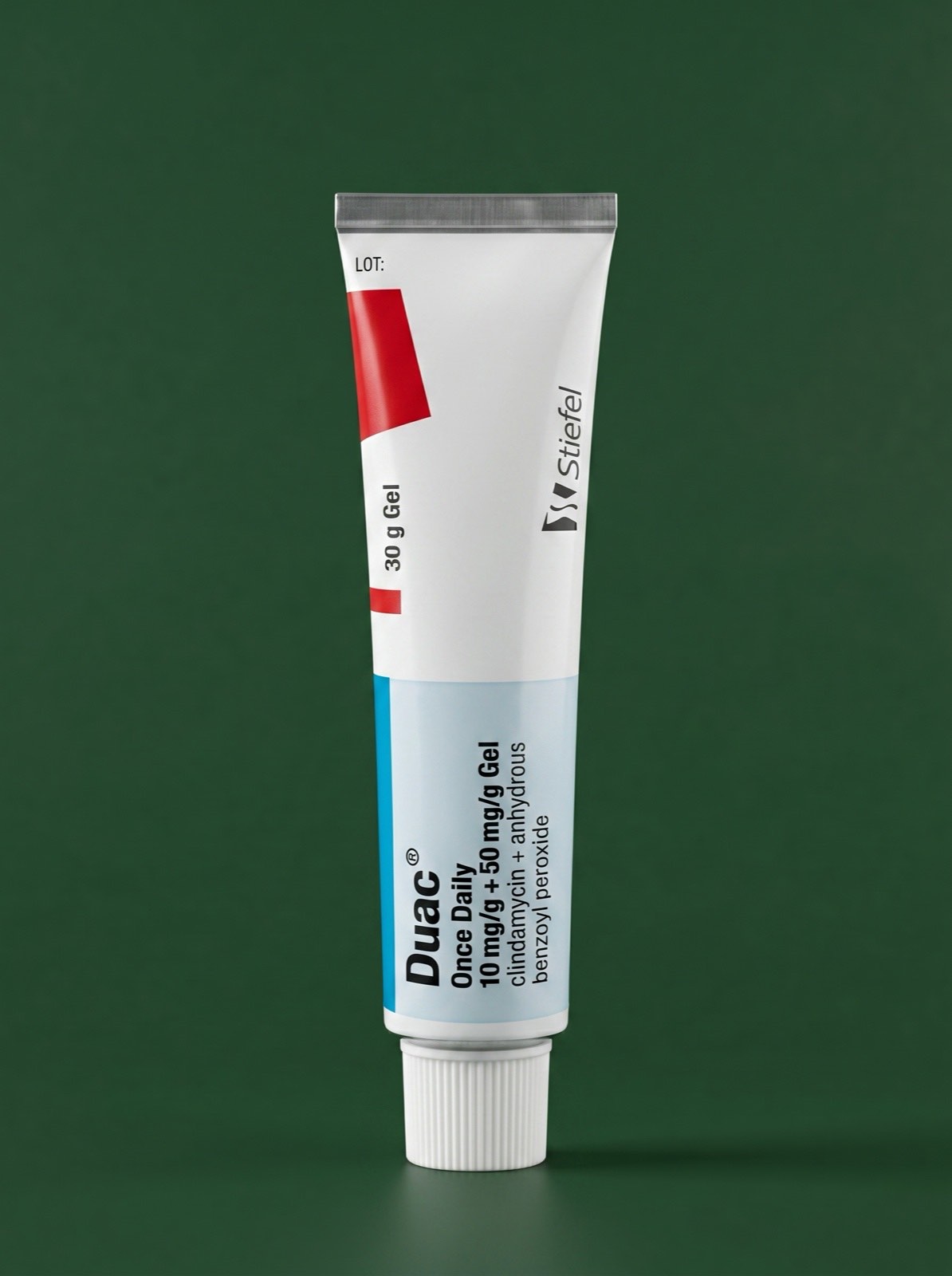
Duac (Clindamycin 1% + Benzoyl Peroxide 5% gel)
Active ingredient
Clindamycin 1% + benzoyl peroxide 5%
Formulation
Topical aqueous gel (fixed combination)
Class
Topical antibiotic + keratolytic antimicrobial combination
Manufacturer
GlaxoSmithKline (UK MHRA-licensed)
“Every Duac prescription is reviewed personally. We check suitability, interactions, and whether it is the right clinical choice.”
— Younes Mekhalfia, GPhC-registered pharmacist

Duac

Clindamycin 1% + Benzoyl Peroxide 5% gel

A once-daily fixed-combination topical (clindamycin 1% + benzoyl peroxide 5%) used as part of a UK pharmacist-led acne programme, prescribed after clinical review for predominantly inflammatory acne.

From£25/ month

Starter dose Thin layer to affected areas, once daily in the evening · Consultation included · Discreet, tracked delivery

  • Once-daily topical application
  • Fixed-dose clindamycin + benzoyl peroxide combination
  • Pharmacist-reviewed before every prescription
  • Discreet, tracked delivery in plain packaging
Check eligibility

Free consultation · You’re only charged if treatment is approved

  • GPhC-registered pharmacy
  • UK Licensed Medication
  • Discreet packaging
How it works

How Duac works in the body

  1. Kills acne bacteria

    Clindamycin is a topical lincosamide antibiotic active against Cutibacterium acnes, the bacteria driving inflammatory acne lesions.

  2. Reduces resistance risk

    Benzoyl peroxide is bactericidal through a non-antibiotic mechanism (reactive oxygen generation), which kills C. acnes and also reduces the selection pressure for antibiotic-resistant strains when combined with clindamycin.

  3. Dampens inflammation

    Both agents reduce the inflammatory cascade that produces papules and pustules. Duac is typically best suited to inflammatory-dominant acne rather than comedonal-only disease.

Clinical evidence

What the trial data shows

Peer-reviewed evidence for Duac, cited and attributed — not reframed as a personal promise.

Randomised controlled trial

Leyden et al. — clindamycin/BPO vs monotherapies

Leyden JJ et al., Journal of Drugs in Dermatology, 2006;5(1):37–42

Participants
287
Duration
10 weeks
Comparator
Clindamycin alone, BPO alone, vehicle

In patients with moderate-to-severe inflammatory acne, once-daily fixed combination clindamycin 1% / BPO 5% produced greater reductions in inflammatory lesion counts than either monotherapy and vehicle. Trial results do not predict individual outcomes.

Pooled trial data

Thiboutot et al. — combination topical meta-review

Thiboutot D et al., Cutis, 2008;82(6):417–421

Participants
1,319
Duration
12 weeks (pooled)
Comparator
Monotherapies, vehicle

Pooled data across acne trials support fixed-combination topical antibiotic/BPO as more effective than either component alone, with the BPO component helping to limit antibiotic resistance.

Trial results do not predict individual outcomes. Your pharmacist will discuss realistic expectations during consultation.

Dosing

Typical dosing schedule

Doses escalate gradually under pharmacist supervision to support tolerability. Your exact plan is set during your consultation.

Typical Duac dose escalation schedule
WeekNotes
Daily

Thin layer to affected areas, once in the evening

Apply to cleansed, dry skin. Avoid eyes, lips, and nostrils. Sunscreen (SPF 30+) daily is essential. Benzoyl peroxide can bleach fabric and hair.

Weeks 1–4

Continue nightly

Mild dryness, redness, or stinging is common in the first 2 weeks. Bland moisturiser helps. Duration of antibiotic-containing topical courses is typically kept to the minimum effective length.

Weeks 8–12

Pharmacist review

UK guidance recommends against indefinite topical antibiotic use. At review, your pharmacist may recommend stepping down to BPO alone or switching to a retinoid-based combination.

Safety profile

Possible side effects

Grouped by frequency. Your pharmacist will review these with you in detail before you start.

Common
  • Skin dryness, peeling, or erythema (typical first 2 weeks)
  • Mild burning or stinging on application
  • Increased sensitivity to sunlight (UV)
  • Bleaching of fabric, towels, pillowcases, or hair (benzoyl peroxide)
Uncommon
  • Contact dermatitis
  • Worsening of pre-existing dermatitis
  • Transient acne flare
Rare
  • Severe allergic reaction (stop and seek urgent medical advice)
  • Severe or persistent gastrointestinal symptoms (including bloody diarrhoea — rare with topical clindamycin but reported; seek urgent medical advice)

Not a complete list. Read the Patient Information Leaflet supplied with your medication. Report any suspected side effects to the MHRA Yellow Card scheme.

Eligibility

Is Duac right for you?

Usually suitable for

  • Adults aged 12+ with mild-to-moderate inflammatory acne
  • No known allergy to clindamycin, lincomycin, benzoyl peroxide, or excipients
  • No active or recent history of inflammatory bowel disease or pseudomembranous colitis
  • Willing to use sunscreen daily and accept fabric bleaching risk
  • Pregnancy and breastfeeding, if our pharmacist judges the benefit outweighs the risk

Not suitable if you are / have

  • History of inflammatory bowel disease or pseudomembranous colitis
  • Severe or persistent diarrhoea
  • Currently taking oral antibiotics
  • Severe cystic or nodular acne (specialist referral usually needed)
  • Active eczema, rosacea, or broken skin on the treatment area

This is a summary, not a complete assessment. A pharmacist reviews your full health history during consultation before any prescription is issued.

What’s included

Everything in your welcome kit

  • 01Duac Once Daily gel (30g tube)
  • 02UK pharmacist prescription review
  • 03Discreet, tracked delivery in plain packaging
  • 04Ongoing pharmacist support via secure messaging
  • 05Follow-up at 8 weeks to review whether to step down
Younes Mekhalfia - independent prescribing pharmacist
Independent Prescribing Pharmacist

Dispensed & Checked by Us

Unlike other online services, we don’t outsource your care. Every prescription is reviewed, dispensed, and packed by our UK-based clinical team. You’re not just a number - you’re a patient we’re committed to supporting.

“Each consultation is reviewed by a qualified prescriber within their clinical scope before any prescription treatment is supplied.”

— Younes Mekhalfia, Independent Prescribing Pharmacist

Every order

Clinical Review

In-house

UK Dispensing

Individual

Clinical Support

Real humans

Support

Everything you need to know about Duac

Find answers about treatment, safety and the service journey.

How does Duac work?

Duac combines two complementary agents. Clindamycin is a topical antibiotic active against the acne-associated bacteria Cutibacterium acnes. Benzoyl peroxide independently kills the same bacteria through a non-antibiotic mechanism and reduces inflammation. Together they target the bacterial-inflammatory component of acne.

How long until I see a response?

Clinical response in inflammatory acne is typically assessed at 8–12 weeks. Many patients notice a reduction in papules and pustules within the first month; full effect takes longer. Response is reviewed by your pharmacist to decide whether to continue or step down.

Why not clindamycin alone?

Using a topical antibiotic alone drives antibiotic resistance in C. acnes. Combining with benzoyl peroxide kills resistant bacteria and reduces selection pressure, which is why UK guidance discourages long-term topical antibiotic monotherapy.

How is this different from Epiduo?

Epiduo is a retinoid-based combination (adapalene + BPO) — typically used where there is a comedonal (blackheads/whiteheads) component. Duac is an antibiotic-based combination (clindamycin + BPO) — typically used where inflammatory papules and pustules dominate. Your pharmacist decides which is more appropriate for you.

How much should I apply?

A thin layer over the affected areas, once in the evening. More is not better — over-application increases irritation without improving efficacy.

Is it a long-term treatment?

UK guidance recommends keeping topical antibiotic-containing treatments to the minimum effective duration — typically up to 12 weeks — to avoid driving antibiotic resistance. Your pharmacist may step you down to benzoyl peroxide alone or switch to a retinoid-based regimen for maintenance.

Can I use it with other topical products?

A gentle non-comedogenic moisturiser and daily SPF 30+ are encouraged. Avoid layering other antibiotics, strong exfoliants, or retinoids without pharmacist review — combinations meaningfully increase irritation risk.

Still have questions? Our pharmacist team is here to help.

Contact us

Your health shouldn’t wait.

Free consultation, pharmacist-reviewed, discreet delivery.

Start your consultation